Does laser engraving damage golf clubs?
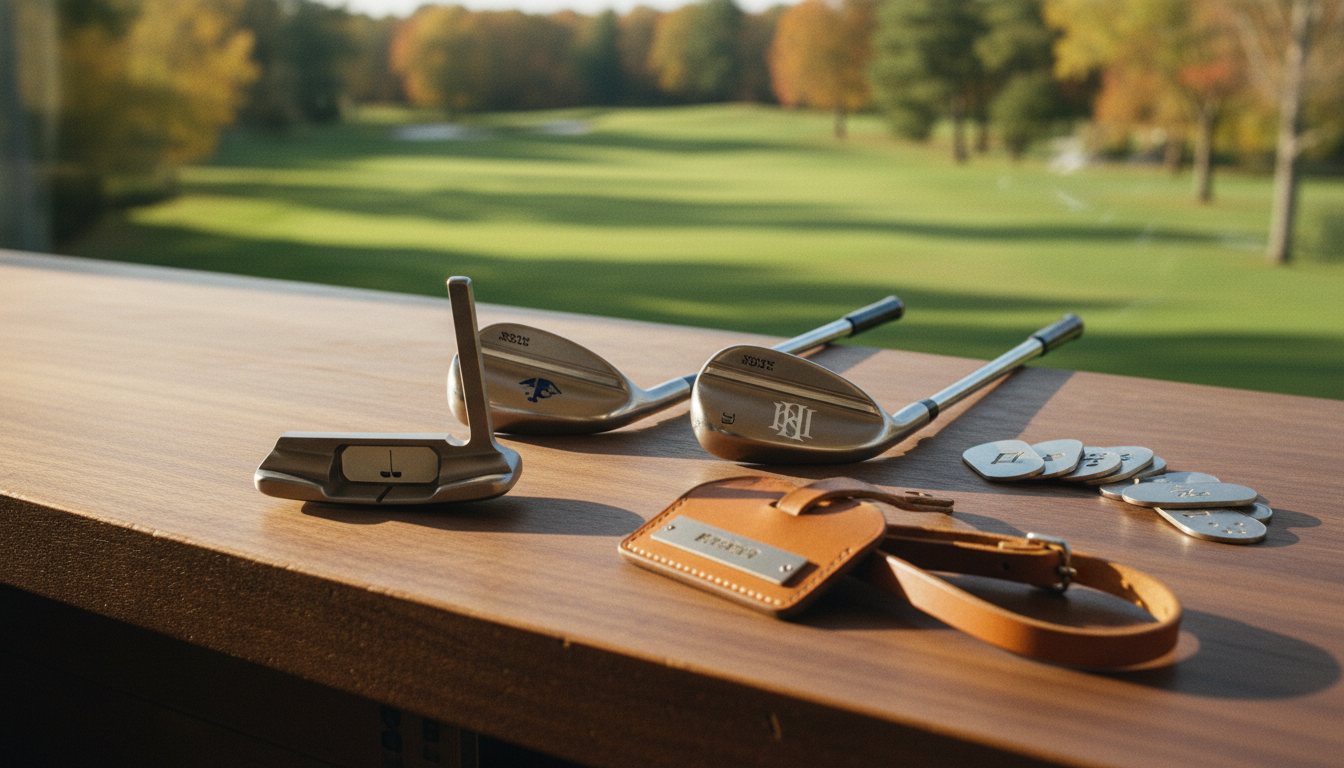
Two processes get called "laser engraving": ablation cuts material away; annealing grows a thin surface oxide and removes nothing. Clubheads get annealing, so the head's mass and geometry are effectively unchanged.
What's safe to mark — and what to avoid.
| Area | The approach |
|---|---|
| Cavity back, toe & heel flats | Ideal — names, logos, patterns, tournament marks |
| Hosel, sole & topline | Safe for initials, dates, and fitting marks |
| Putter cavity & flange | Excellent for custom multi-line engraving and paint fill |
| Ferrules & accessories | Ferrules, divot tools, ball markers, bag tags |
| Striking-face grooves | Conforming grooves aren't altered — those are regulated for play |
One caveat worth knowing: personalizing a new club can affect the manufacturer's warranty, so check the maker's policy first. If keeping a club tournament-legal matters, say so and the mark stays clear of the face. More on golf engraving and club refinishing.
Quick answers.
Does it change swing weight?
Annealing removes no material and adds no measurable mass, so — done correctly — swing weight and balance are effectively unchanged.
Will it rust or fade?
The oxide mark is permanent and, on stainless, leaves the corrosion-resistant surface intact. It won't wipe off with use.
Can you mark golf balls too?
Yes — a UV laser marks urethane and Surlyn covers permanently without melting them, with a mark designed not to affect play.
Mark your clubs.
Send a photo of the club and what you'd like — a confirmation of what's safe and a quote follow, free.