Part marking at production volume. Serial numbers, data-matrix codes, UDI-format marks, logos, and batch codes — permanent, machine-readable, and identical from the first part to the last. Metals, plastics, glass, and coatings.
Industrial marking.
§ I — The thesis
Why laser part marking.
Ink pads dry out. Labels fall off. Dot-peen stamps deform thin walls. A laser mark is in the surface of the part — and it reads the same on part 1 and part 4,000.
Every mark is driven from data, not a die. Sequential serials, date and lot codes, data-matrix and QR symbols, or a full per-part CSV — the file drives the run, so there's no re-tooling between variants and no wrong-plate mistakes. Change the revision letter and the next part carries it.
The hard part isn't the machine — it's the substrate. The parameters that anneal a clean black UDI mark on 316L stainless will burn a hole in anodize; the pass that frosts polycarbonate will melt ABS. Every run starts with a marked first article on your actual part, approved before production begins.
Honest scope: this is a batch shop, not an inline production cell. Runs from a couple dozen to a few thousand parts are the sweet spot. If you need marking bolted into a conveyor line at six figures a month, you need an integrator — and you'll hear that in the first conversation.
i.
Permanent & machine-readable.
The mark is a change in the material, not a layer on top. Data-matrix and QR codes stay scannable through handling, cleaning, and years of service.
ii.
Variable data, per part.
Serials, lot codes, dates, and 2D symbols generated from your spreadsheet or numbering scheme. Every part unique, no tooling change between them.
iii.
Substrate-safe.
Annealed marks on stainless and titanium leave the surface flush and corrosion-resistant. UV marking on plastics adds almost no heat — no melt, no burrs, no distortion.
§ II — Verticals
What gets marked.
Industrial · Medical · Consumer
01 — Industrial
Components & equipment.
Traceability and identification for machined, molded, and fabricated parts. Serial numbers and 2D codes for work-in-process tracking, asset tags for equipment fleets, and rating-plate data on enclosures and panels. Marks placed to your drawing, repeated by fixture.
Part & serial numbers
Data-matrix & QR codes
Asset & tool ID tags
Nameplates & rating plates
Control panels & legends
Electrical & electronic enclosures
Fasteners & fittings
Weld-free ID on finished parts
Volume
25 – 5,000 parts
Marks
Anneal · engrave · ablate
Best fit
Machine shops & OEMs
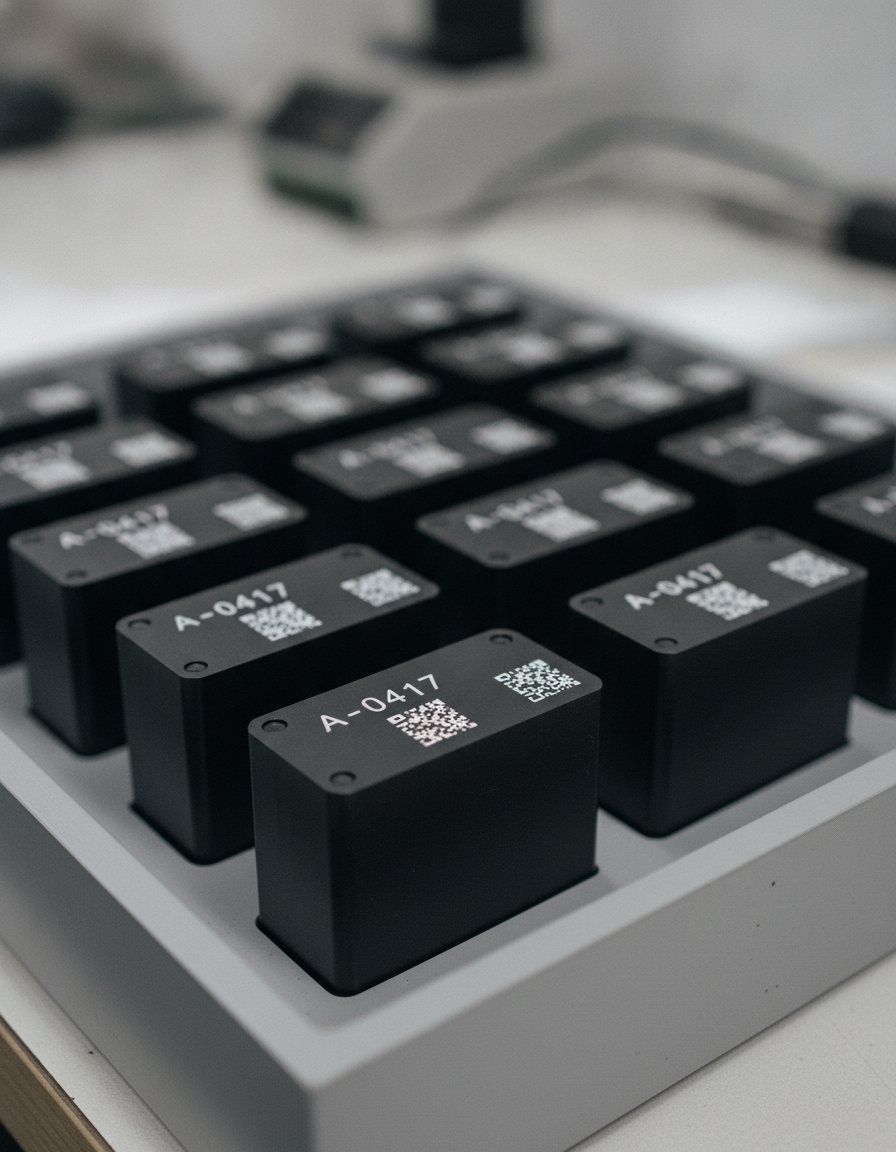
FIG. 31 — Fixtured tray, sequential serials & data-matrix per part
02 — Medical
Devices & instruments.
UDI-format data-matrix and human-readable marks on instruments and device components. MOPA annealing writes the mark on the surface without removing material — no recess to trap contaminants, and the mark survives autoclave cycles and passivation. To be direct: we mark to your drawing and your spec; validation and regulatory ownership stay with the device manufacturer.
UDI data-matrix & text
Surgical instrument ID
Stainless & titanium anneal
Lot & expiry coding
Device housings (UV on plastics)
Autoclave-stable marks
Passivation-safe surfaces
Marking to customer spec
Volume
Pilot lots – production runs
Marks
Flush anneal · UV cold mark
Best fit
Device OEMs & instrument makers
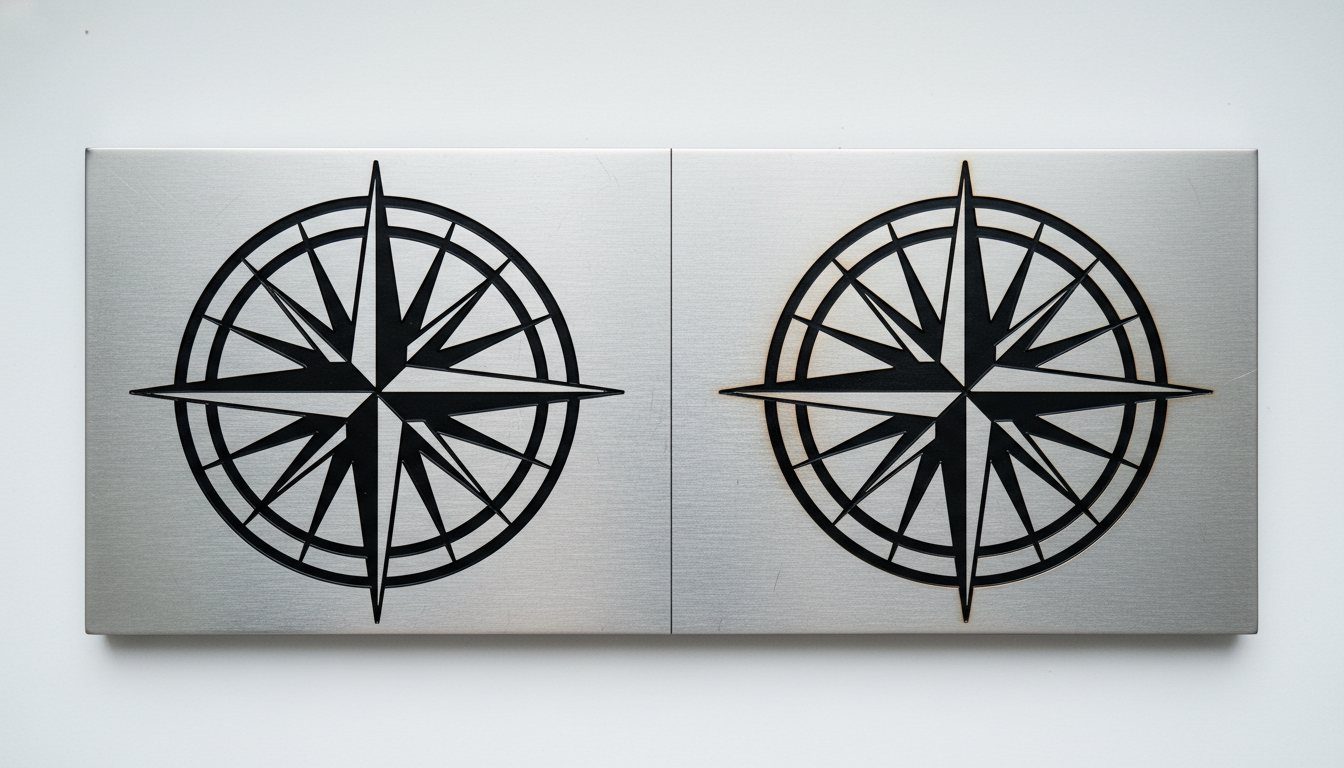
FIG. 32 — Engraved vs. annealed: medical marks stay flush to the surface
03 — Consumer
Products & brands.
Branding and compliance marks on finished goods — logos on housings and hardware, batch and date codes, regulatory text, and serialized limited editions. The same file discipline as industrial work, with the finish quality of the engraving bench: a logo on part 500 looks like the logo on the sample you approved.
Logos on metal & plastic
Batch & date codes
Serialized limited editions
Regulatory & compliance text
Drinkware & EDC hardware
Electronics housings
Packaging components
Private-label runs
Volume
50 – 5,000 units
Marks
Ablate · anneal · color mark
Best fit
Product brands & makers
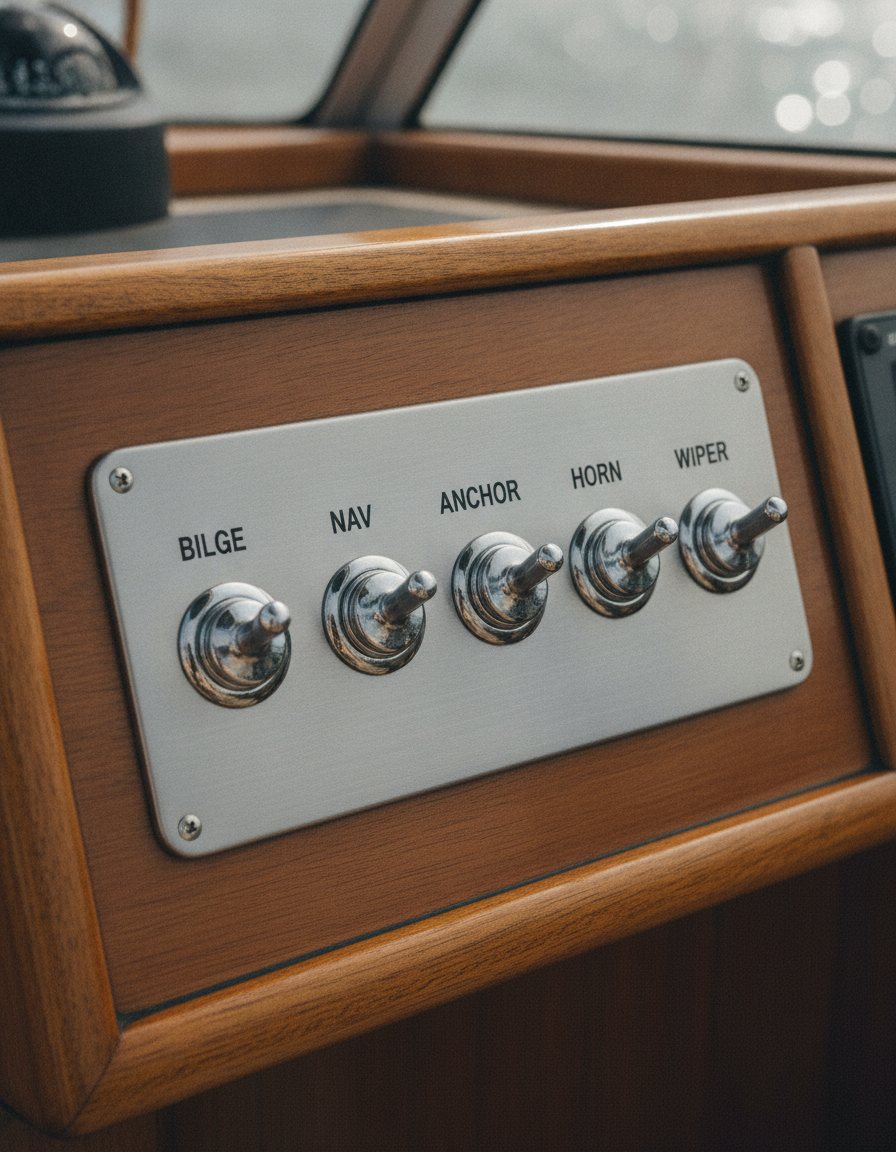
FIG. 33 — Production legend marking on brushed 316 stainless
§ III — Materials
All materials.
Two lasers · MOPA fiber + UV
Material
Production mark
Stainless steel (304, 316, 316L, 17-4)
Flush black anneal — UDI-grade, autoclave- and passivation-stable
Titanium
Black anneal and color marking; instrument and aerospace ID
Anodized aluminum
High-contrast white marking without breaking the anodize layer
Bare aluminum, brass, carbon steel
Dark surface marking and deep engraving for harsh-duty parts
Engineering plastics (ABS, PC, PA, POM, PEEK)
UV cold marking — crisp contrast, no melt, no burrs
Glass & ceramics
Surface frost marking for codes, scales, and branding
Coated & painted surfaces
Mark the coating, leave the substrate — panels, housings, plated parts
A material not listed gets tested on a sample before anything is quoted. Send two extra parts with the first article.
§ IV — Process
How a production run works.
First article → fixture → run → verify
i.
First article
Send the drawing, the artwork, and a few sample parts. Mark placement, size, depth, and contrast are dialed in on your actual material and photographed for approval. Nothing runs until the first article is signed off.
You provide
Drawing · artwork · samples
ii.
Fixture & data
A fixture locates every part identically, so mark position repeats across the run. Variable data — serial ranges, lot codes, per-part CSV — is loaded and spot-checked against your numbering scheme before production starts.
You provide
Serial scheme or CSV
iii.
Run & verify
The batch runs against the approved first article. 2D codes are scan-checked through the run, marked parts are counted against the data file, and the job ships back trayed the way it arrived. Repeat orders re-use the stored fixture and program.
You get
Marked parts · scan-checked codes
Pricing is per run, quoted from the drawing: a setup charge covering first article and fixturing, then a per-part rate that falls with volume. Repeat runs skip most of the setup. How quoting works.